
Table of Contents
How important are the linear dimensional tolerances? You would understand if you had ordered castings in an unfitted size. They can help you reduce costs in sourcing components for cars, machines, or consumer hardware. In the following sections, linear dimensional tolerances will be explained, including the grades and how to choose them .
1. What is the linear dimensional tolerance of a casting?
There will be shrinkage and mild displacement during the molten metal cooling process. Therefore, the product size will not be 100% accurate. Linear dimensional tolerance is the acceptable margin of error. (For example, if the dimensional tolerance of a 100mm component is ±0.5mm, then the actual measurement, which ranged from 99.5mm to 100.5mm, is acceptable.) There is an international standard (ISO 8062-3) that provides a reference framework for both buyers and suppliers.
Beyond allowing for error, the linear dimensional tolerance also provides a common language among designers, engineers, and factories. Otherwise, the parts or components manufactured by the same design plan but different factories are not interchangeable.
The shrinkage rate of different metals is different. Aluminum alloy is approximately 1.3%, and carbon steel can reach 2%. There can be a 10mm error in a 500mm component with a shrinkage rate of 2%, which can lead to failure to assemble. Therefore, it is essential to consider the linear dimensional tolerance at the start of the design.
2. Linear dimensional tolerance grades of castings
16 linear dimensional casting tolerance grades are defined and designated as DCTG 1 to DCTG 16 in ISO 8062-3.
Grade range | Tolerance level | margin of error (for 100mm component) |
DCTG 1–4 | Very tight | <±0.3mm |
DCTG 5–9 | Medium | ±0.5–0.9mm |
DCTG 10–14 | Loose | ±1–4mm |
DCTG 15–16 | Very loose | >±4mm |
The tolerance level is tighter with a smaller numeric value.
With the example of a 100mm component, DCTG 4 can only allow a margin of error of ±0.26mm, while DCTG 13 can allow ±3.2mm. The accuracy difference is more than 12 times. Choosing the suitable grade can avoid over-design and rework.
It is noteworthy that different parts of the component can be designed in different linear dimensional tolerance grades.
For example, the seal interface of a pump case requires DCTG 6, while the non-contact surface of the outer casing requires DTCG12 only. It can ensure the precision of the key parts without increasing the cost a lot.
The wall thickness tolerance is processed separately in ISO 8062-3. The thin sections of the wall are coarser than the other parts because they are difficult to control during filling and cooling.
3. How to select the appropriate grade for different casting processes?
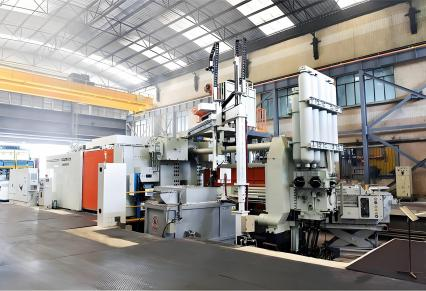
The grade range of the product is different in different casting process.
High-pressure Die Casting |
DCTG 4–6 |
±0.3 – ±0.5 mm | High-volume, small-to-medium aluminium/zinc parts |
Investment Casting (Silica Sol) | DCTG 4–6 | ±0.3 – ±0.5 mm | Complex shapes, stainless steel, aerospace |
Investment Casting (Water Glass) | DCTG 7–8 | ±0.6 – ±0.9 mm | Carbon steel, cost-sensitive precision parts |
Green Sand Casting | DCTG 10–13 | ±1.0 – ±3.0 mm | Large, low-cost structural components |
Other than the 4 casting process listed on the above table, there are other choices on the market, such as Permanent Mold Casting (DCTG 6-10) and Shell Mold Casting (DCTG 7-9), which are suitable for medium-batch non-ferrous metal parts and automotive valve components respectively.
It is important to discuss with the factory before finalizing the design, as the required tolerance grade often determines which casting process is suitable.
There is a practical principle when choosing the casting process and linear dimensional tolerance grade: think of which parts are for aesthetics and which parts are for functionality. Only those parts for functionality (such as mounting hole layout) require a tight tolerance grade.
If there are post-processing in the parts, such as CNC machining, the linear dimensional tolerance can be loosen appropriately, as the final precision is decided by the post-processing. It can allow the choice less costly casting process, and can lower the cost.
It is worth noting that the international standard ISO 8062-3 also recommended buyer communicate with the factory before the design is finalized. It is because of the difference in equipment and process capabilities in different factories.
The factories using the same casting process, such as Silica Sol, can reach different tolerance grades.
The choice of the casting process is also determined by commercial considerations. High-pressure die casting can produce products with high precision and a smooth surface, but the cost of the mold can cost up to tens of thousands of US dollars. Green sand casting is more reasonable for small batch production or sampling.
To conclude, there are no definite answers to the choice of grade for different casting processes. It depends on the
batch size, budget, lead time, and the intended use of the components. The factory can provide the casting process that suits the most if these four factors are listed.
4. The influence of linear dimensional tolerances on castings
Not only the number on the design, the linear dimensional tolerances can also affect the followings. Understanding these effects can help to make a better decision at the design stage.
● Cost: to tighten the grade from DCTG 10 to DCTG 6, the cost can be double or more. It is because of the extra input in a more precise mold, slower injection speed, and the strict cooling control.
● Post-processing: the casting of loose tolerance required CNC machining post-processing, but the overall cost may still be lower than that of using precision casting.
● Assemble fitness: the deviation in tolerance can affect assembly if the component is required to assemble with other parts. The accumulation of the deviation in tolerance is called “tolerance stack-up”. Therefore, the more complicated the assemble, the stricter the control in tolerance for each part or component.
● Surface roughness: the looser the tolerance, the rougher the surface will be. If there is a requirement in sealing or appearance, the surface roughness and the tolerance have to be considered when choosing the casting process.
● Scrap rate: the scrap rate will become higher if the required tolerance does not match the process capability. A responsible factory will provide data of Statistical Process Control (SPC) in advance, which can prove its ability to
reach the grade requested.
The linear dimensional tolerances can also indirectly affect the lead time. The strict grading requires slower injection speed, longer cooling time, and also more stringent inspection procedures, which can lengthen the production cycle. It is essential to ask for actual process capability and lead time when choosing suppliers.
5. Are there any other casting parameters?
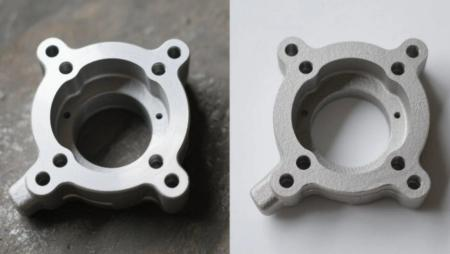
● Geometrical Casting Tolerances (GCT): flatness, roundness, perpendicularity, etc. It collaborates with linear dimensional tolerance to describe the form accuracy of the cast.
● Machining allowance: spare extra materials for further cutting. The amount ranges from A (smallest) to H (largest). Leaving too little may lead to insufficient surface after process, and leaving too much results in wasting.
● Draft angle: the angle that allows the casting to demold, usually ranging from 0.5° to 3°. It may cause surface scratching during demolding if the draft angle is too small. It may even damage the mold and increase
maintenance costs.
● Wall thickness: die casting can reach the thickness of 0.8mm, while sand casting requires 3mm or above. The design with less that minimum wall thickness is prone to material starvation, cold shut, or porosity.
● Surface Roughness (Ra): the average deviation of the surface from a mean line. Die casting can reach Ra 1.6-6.3 μm, while green sand casting can reach Ra 50 μm, which is a great difference.
● Porosity: important to sealing or pressure-bearing parts and required to be verified by X-ray or CT scan. The cause of porosity includes gas entrapment and cooling shrinkage. It can be reduced by improving the gating system and the use of vacuum die casting.
These parameters influence each other. For example, a factory usually suggest to reduce machining allowance if a stricter grade range is chosen. If the draft angle is too small, the surface may be scratched during demolding, and it may affect surface roughness. It is recommended to organize all the parameters and provide a comprehensive technical specification but not the design drawing only, which can prevent most quality problems because of
miscommunication.
6. Here are 5 recommended factories that produce castings using international standard casting tolerances
Precision casting and produces 8,000 tons annually. CT5–CT8 | |
EASIAHOME (China) | ISO 9001 certified, with one-stop service. CT5–CT6 |
Dawang Metals (China) | Consists of three factory sites with 120,000 square meters. ISO 9001 + 14001 |
Casting Quality Industrial (China) | Can reach CT4 and is suitable for stainless steel |
MetalTek International (USA) | Suitable for buyers who require an AS9100 (aerospace) certificate |
Before the mass production, it is important to ask for a first article inspection report, and to make sure that the factory produce according to the standard ISO 8062-3 or equivalent. A supplier that can provide a certificate on tolerances is more reliable and more suitable to establish a long-term cooperative relationship. It can optimize the components in the design phase and result in a simpler and less costly production.
Related Post might be HELPFUL to you: Top 15 Metal Casting Foundries in the World

 English
  Spanish
  Portuguese
  French
  German
  Italian
  Arabic
  Russian
  Korean
  Japanese
  Indonesian
  Chinese