
Table of Contents
Metal casting is one of the oldest—and still one of the most important—manufacturing processes in the world. In simple terms, it involves melting metal, pouring it into a mold, allowing it to solidify, and then removing the finished part. While the concept sounds straightforward, modern casting technologies can produce everything from tiny automotive components to massive wind turbine hubs with remarkable precision. This article explains how metal casting works, the major casting methods, the metals commonly used, the advantages and limitations of casting, where it is applied, and how it compares with metal forging.
Manufacturers often have dozens of production methods to choose from. Yet casting continues to dominate industries where complex shapes, cost efficiency, and scalability matter.
How Does Metal Casting Work?

At its core, metal casting follows a simple sequence: melt the metal, prepare the mold, pour the molten metal, allow it to cool, remove the casting, and finish the surface if necessary.
From an engineering perspective, producing a high-quality casting requires careful control of pouring temperature, mold design, cooling rate, and shrinkage. Even a small mistake can lead to porosity, cracks, or incomplete filling.
In our experience, mold design often determines whether a casting project succeeds or fails. Modern foundries also rely on simulation software to optimize filling and reduce defects before production begins.
What Are the Main Types of Metal Casting?
Common methods include Sand Casting, Die Casting, Investment Casting, and Permanent Mold Casting. Each offers different advantages depending on production volume, material, precision requirements, and cost. We have found that manufacturers often combine multiple casting processes instead of relying on a single method.
What Metals Can Be Cast?
Common casting materials include carbon steel, stainless steel, cast iron, aluminum, copper, brass, bronze, zinc, magnesium, and nickel alloys. Choosing the right alloy is about balancing strength, weight, corrosion resistance, machinability, and overall cost.
What Are the Advantages and Disadvantages of Metal Casting?
Advantages include design freedom, cost efficiency for complex parts, compatibility with many alloys, and excellent scalability. Potential disadvantages include shrinkage, porosity, additional machining requirements, and tooling costs for certain processes. Advances in automation and quality control have significantly improved consistency.
Common Applications of Metal Casting

Metal casting is widely used in automotive, construction machinery, mining equipment, industrial pumps, railway systems, marine engineering, agricultural machinery, wind power, and aerospace industries. Many EV manufacturers now use large integrated aluminum castings to simplify production and reduce vehicle weight.
Metal Casting vs Metal Forging: What's the Difference?
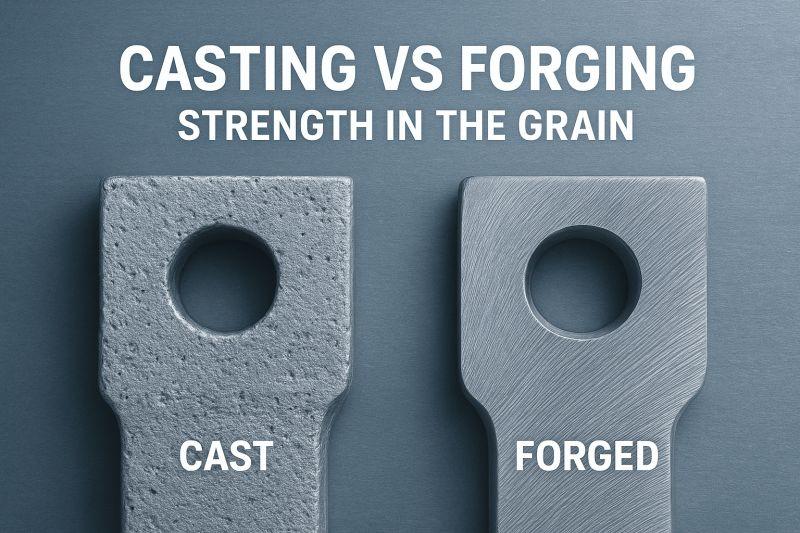
Casting forms parts by pouring molten metal into a mold, while forging shapes solid metal using compressive force. Forging generally provides higher mechanical strength, whereas casting excels at producing complex geometries and large components economically. From an engineering perspective, selecting the best process depends on the application rather than simply choosing the strongest option.
Final Thoughts
Metal casting remains one of the foundations of modern manufacturing. As simulation software, automation, and advanced alloys continue to evolve, casting is becoming even more efficient and sustainable. Understanding the fundamentals of casting helps buyers and engineers make better manufacturing decisions.
Related Post might be HELPFUL to you: Top 10 Metal Casting Foundries & Manufacturers in China
 English
  Spanish
  Portuguese
  French
  German
  Italian
  Arabic
  Russian
  Korean
  Japanese
  Indonesian
  Chinese