
Table of Contents
A casting alloy that works well for one component may not be the right choice for another. A thin-walled electrical enclosure, for example, needs molten aluminium to reach narrow sections before solidification begins. An automotive suspension component has a different priority: strength, ductility, and resistance to repeated loading may be more important than filling speed alone.
This is one reason aluminium alloy selection deserves attention before production starts. The material affects how easily a component can be cast, how much machining it requires, whether it can be heat-treated, and how it performs after installation.
Among the grades used in industrial casting, A356, A380, ADC12, A413, and 319 are particularly worth understanding. They are not interchangeable materials. Each has its own advantages, limitations, and preferred manufacturing conditions.
This article compares these aluminium casting alloys and explains how to select a suitable grade for different components and production requirements.
1. What Makes an Aluminium Alloy Suitable for Casting?
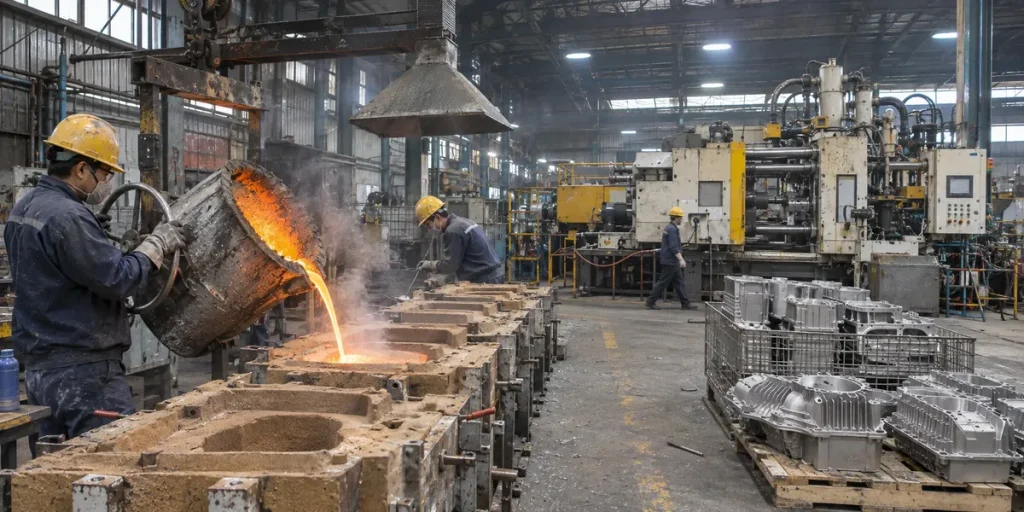
Aluminium casting alloys contain carefully controlled amounts of elements such as silicon, copper, and magnesium. These additions change how the molten metal flows, solidifies, and behaves after cooling.
Silicon is especially important. It improves fluidity and helps molten aluminium fill mold cavities, making it useful for components with thin walls or complicated shapes. However, good fluidity alone does not guarantee a sound casting. Mold temperature, gating design, pouring conditions, and solidification control also have a major influence on the final result.
Other alloying elements serve different purposes:
- Magnesium (Mg):Supports precipitation hardening and can improve strength after suitable heat treatment.
- Copper (Cu):Increases strength and hardness in many casting alloys, but generally reduces corrosion resistance.
- Manganese (Mn):Can help control the effects of iron-containing phases in certain alloy systems.
- Iron (Fe):Often present in die-casting alloys. Excessive iron-containing phases can reduce ductility and affect mechanical performance.
It is also important to distinguish casting alloys from wrought aluminium grades. Materials such as 6061 and 5052 are mainly supplied as extruded, rolled, or sheet products. They should not be treated as direct substitutes for conventional casting alloys such as A356, A380, or ADC12.
2. Common Aluminium Alloys Used in Metal Casting
2.1 A356 Aluminium Alloy: A Choice for Heat-Treated Castings
A356 is an aluminium-silicon-magnesium alloy widely used in sand casting, permanent mold casting, and low-pressure die casting. It is often selected when a component needs a combination of strength, ductility, and relatively good casting performance.
One of its important characteristics is its response to heat treatment. In the T6 condition, the alloy undergoes solution heat treatment, quenching, and artificial aging. This process can significantly improve its mechanical properties compared with the as-cast condition.
That advantage comes with additional process requirements. If a casting contains excessive gas porosity, heating it during solution treatment can cause defects to expand and may lead to blistering or surface distortion. Foundries therefore need to pay close attention to melt quality, mold filling, and solidification conditions before sending A356 castings for heat treatment.
Typical applications include:
- Automotive wheels and suspension components
- Pump and valve bodies
- Structural brackets
- Industrial machinery housings
- Components requiring improved strength after heat treatment
A356 is a sensible candidate when mechanical performance matters more than achieving the lowest possible casting cost. It is not automatically the best option for every complex, thin-walled die-cast component.
2.2 A380 Aluminium Alloy: Widely Used for High-Pressure Die Casting
A380 is a common aluminium alloy for high-pressure die casting. Its silicon and copper content gives it a practical balance of castability, strength, hardness, and machinability.
In production, A380 is often used for housings and mechanical parts with detailed features. It can be a good fit for manufacturers producing large quantities of components where repeatability and cycle time matter.
Typical applications include:
- Gearbox and transmission housings
- Electric motor housings
- Electrical enclosures
- Automotive brackets
- Industrial equipment covers
There are trade-offs. The copper content contributes to strength but can make the alloy less attractive for components exposed to corrosive environments. Machining also requires attention to casting quality. If internal porosity is exposed during drilling or milling, the finished surface may contain visible holes or leakage paths.
For this reason, the alloy should be evaluated alongside the component’s corrosion exposure, machining allowance, and inspection requirements.
2.3 ADC12 Aluminium Alloy: A Familiar Grade in Asian Die-Casting Production
ADC12 is a JIS aluminium die-casting alloy widely used by manufacturers in Japan and other Asian markets. Its relatively high silicon content gives it good fluidity, while copper contributes to strength and hardness.
The alloy is frequently used for components with complicated geometry, ribs, bosses, and relatively thin sections. It is also familiar to many die-casting suppliers, which can make sourcing and production coordination more straightforward.
Common applications include:
- Automotive and motorcycle housings
- Electrical equipment enclosures
- Appliance components
- Mechanical covers
- General-purpose die-cast parts
A point worth checking during purchasing is the material specification. ADC12 and A380 are sometimes discussed as broadly comparable die-casting materials, but their chemical composition limits and standard requirements are not identical.
A buyer should not approve a material substitution simply because a supplier describes the alternative as equivalent. The applicable standard, chemical composition, mechanical requirements, and component performance should all be reviewed before the change is accepted.
2.4 A413 Aluminium Alloy: Useful Where Fluidity Is Important
A413 is a high-silicon aluminium casting alloy. Its strong fluidity makes it useful for components where molten metal needs to pass through relatively narrow sections or fill complex mold cavities.
The alloy is also considered for certain pressure-tight castings. However, pressure tightness is not determined by material composition alone. Porosity, mold filling, solidification, and process control all influence whether a finished component can contain liquid or gas without leakage.
Typical applications include:
- Hydraulic equipment components
- Pneumatic housings
- Thin-walled castings
- Pressure-containing components
- Parts with complex internal geometry
A413 should be considered when filling characteristics are a major concern. If the component also has demanding strength or fatigue requirements, those properties need to be checked against the relevant material specification and actual casting condition.
2.5 319 Aluminium Alloy: Used in Selected Engine and Machinery Components
319 is an aluminium-silicon-copper casting alloy used in applications where strength, machinability, and performance under elevated operating temperatures are important.
It is commonly associated with sand casting and permanent mold casting. Depending on the required properties, the alloy may also be supplied in different heat-treated conditions.
Its use in engine-related components is not accidental. Parts exposed to heat and mechanical loading need a material that can maintain suitable properties during service. At the same time, the casting must be designed and produced to control shrinkage, porosity, and dimensional variation.
Typical applications include:
- Engine-related components
- Automotive housings
- Industrial machinery parts
- Pump components
- Castings requiring machining after production
The final selection should take account of the operating temperature, mechanical load, corrosion exposure, and required surface finish.
3. A356 vs. A380 vs. ADC12: Which Alloy Should You Choose?
These three grades are often considered during aluminium casting projects, but they serve different manufacturing needs.
Project Requirement | Possible Alloy Choice | Main Reason |
Heat-treated structural casting | A356 | Suitable for applications requiring improved mechanical properties after heat treatment |
High-volume die-cast housing | A380 or ADC12 | Established options for high-pressure die casting |
Complex die-cast component | ADC12 or A380 | Commonly used for detailed die-cast geometries |
Component requiring good fluidity | ADC12 or A413 | High silicon content supports mold filling |
Component requiring a balance of strength and ductility | A356 | Can achieve useful mechanical properties in an appropriate heat-treated condition |
Consider a manufacturer developing an aluminium housing for industrial equipment. If the component is produced in high volumes using high-pressure die casting, A380 or ADC12 may be practical starting points. If the design instead requires a heat-treated structural casting made through a different process, A356 may deserve closer attention.
The decision should not be made from the alloy name alone. Wall thickness, loading conditions, internal pressure, machining requirements, and the foundry’s production capabilities can change the recommendation.
4. Choosing an Alloy for Different Casting Processes
The casting method places its own demands on the material. Selecting an alloy without considering the manufacturing process can lead to filling defects, poor casting quality, or unnecessary production costs.
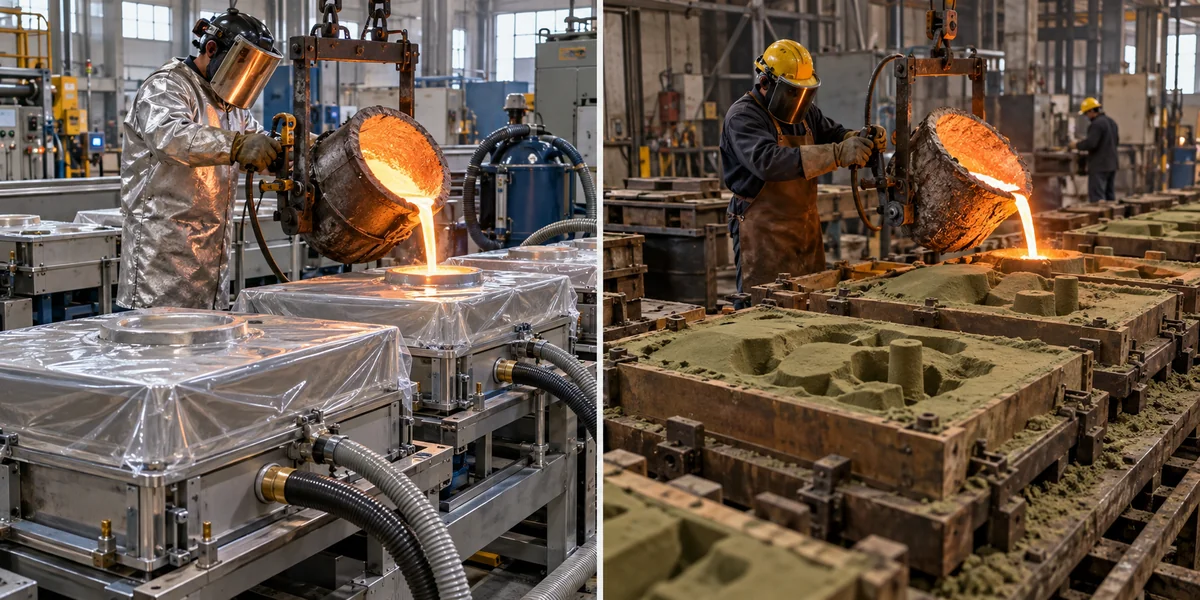
Sand Casting
Sand casting is suitable for large components, prototypes, and production runs where permanent tooling may not be economical. A356 and 319 are common options.
The process offers flexibility in mold design, but filling and solidification need careful control. Large changes in section thickness can create hot spots and shrinkage defects if the feeding system is not properly designed.
High-Pressure Die Casting
High-pressure die casting is used for high-volume production of components with detailed features and relatively thin walls. A380 and ADC12 are established choices.
The process offers short production cycles, but the result depends on injection speed, metal temperature, die temperature, venting, and vacuum conditions where applicable. Entrapped air and gas porosity can become serious issues, particularly when castings need extensive machining or pressure testing.
Gravity Die Casting
Gravity die casting fills a reusable metal mold without high-pressure injection. A356 is commonly considered for this process.
Compared with sand casting, permanent molds can provide improved dimensional consistency and surface finish in suitable applications. Tooling costs are higher, so production volume should be considered before choosing this method.
Low-Pressure Die Casting
Low-pressure die casting uses controlled gas pressure to move molten aluminium into the mold. A356 is widely used, particularly for automotive wheels and other components requiring good casting integrity.
The controlled filling process can help reduce turbulence and improve metal feeding. Even so, process parameters and mold design must be developed around the component’s geometry and quality requirements.
5. Production Issues That Can Affect Alloy Selection
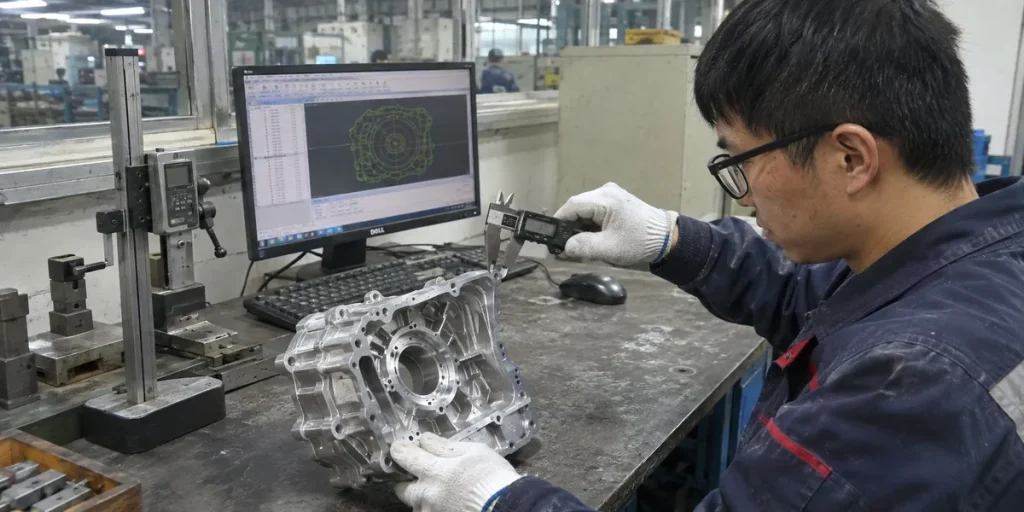
Material selection is only one part of casting quality. A suitable alloy can still produce defective parts if the process is not properly controlled.
Porosity after machining
A casting may appear acceptable before machining, only for small holes to become visible after material is removed. This can happen when gas or shrinkage porosity is present beneath the original surface. Components with deep machining operations or pressure-tight requirements may need more stringent internal quality checks.
Blistering during heat treatment
Heat treatment can expose problems that were not obvious during initial inspection. Gas trapped inside a porous casting may expand at elevated temperatures, creating surface blisters or distortion. This is one reason A356 castings intended for T6 treatment need careful process control.
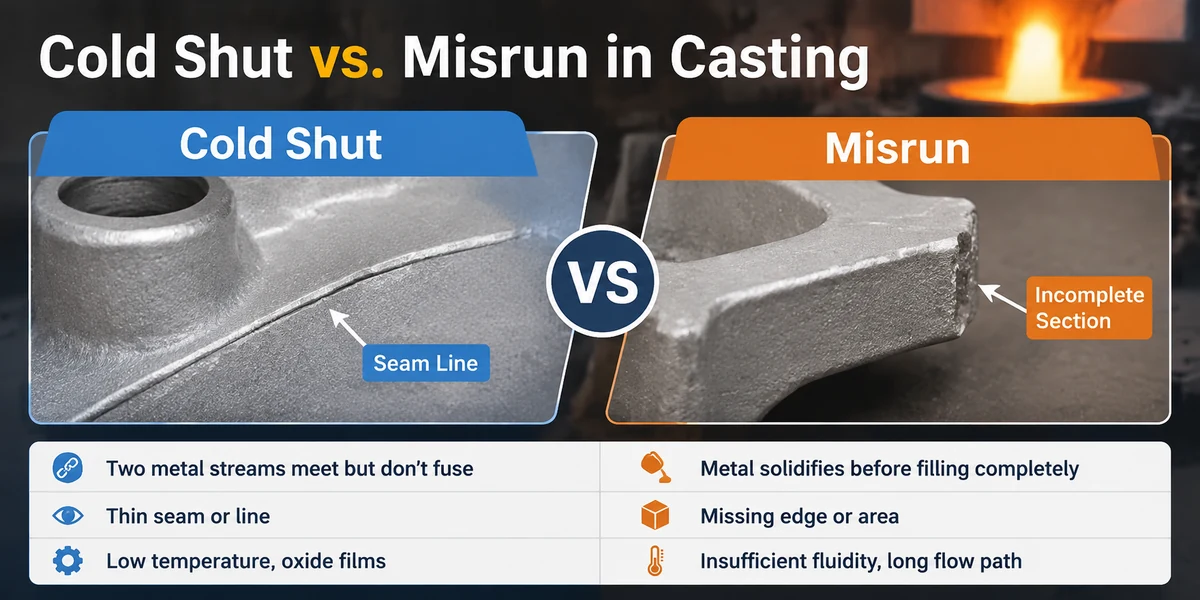
Incomplete mold filling
Thin sections, long flow paths, and insufficient metal temperature can cause the molten metal to solidify before reaching the end of the cavity. Alloy fluidity matters, but simply raising the pouring temperature is not always the correct solution. Gating design, mold temperature, and filling speed should also be reviewed.
Corrosion after installation
A component that performs well in a dry indoor environment may deteriorate faster when exposed to moisture, salt, or chemicals. Copper-containing alloys such as A380 and 319 may need additional consideration where corrosion resistance is important. Protective coatings and surface treatments may help, but their suitability depends on the alloy and service environment.
6. What Should Buyers Confirm Before Ordering Aluminium Castings?
For procurement teams, selecting an alloy involves more than requesting a quotation with a material grade written on it. Several details should be confirmed before production begins.
- Material designation:Specify the exact alloy and the standard under which it is supplied.
- Chemical composition:Request material test documentation where required.
- Mechanical properties:Define the required tensile strength, yield strength, elongation, and hardness where relevant.
- Heat-treatment condition:State whether the component must be supplied as-cast, T5, T6, or in another specified condition.
- Casting process:Confirm whether the part will be sand cast, gravity die cast, low-pressure cast, or high-pressure die cast.
- Inspection requirements:Specify dimensional inspection, radiographic testing, pressure testing, or other checks where the application requires them.
- Machining and finishing:Confirm machining allowances, surface treatment, and acceptable surface defects.
A useful approach is to provide the foundry with a component drawing, expected annual quantity, working conditions, and critical quality requirements. This gives the supplier enough information to evaluate the material and manufacturing route together.
7. Common Applications of Aluminium Casting Alloys
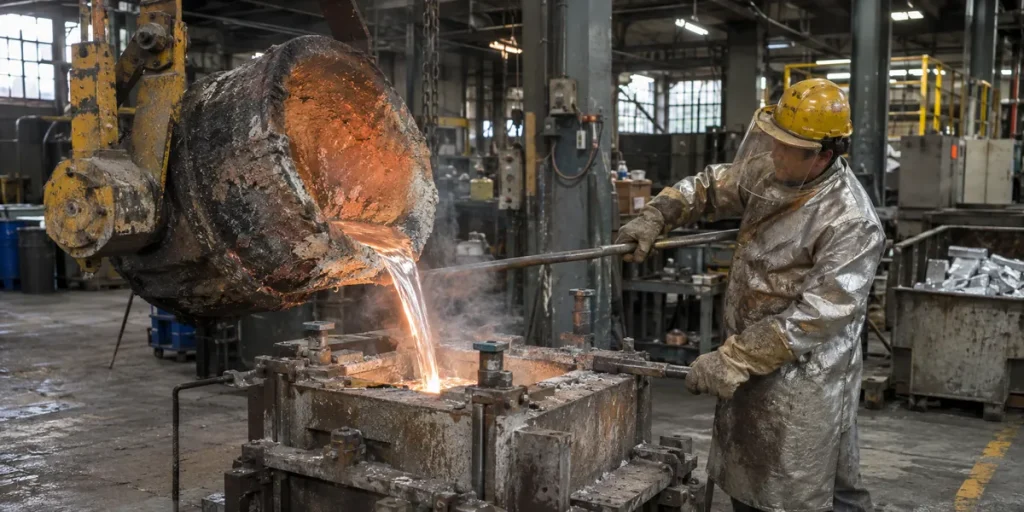
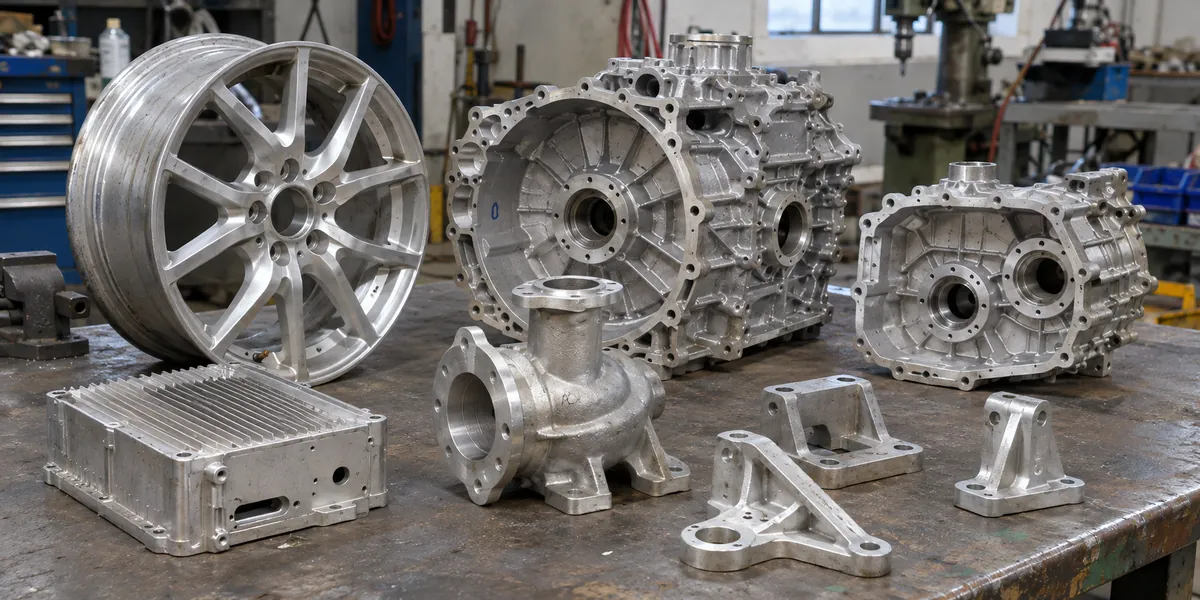
In automotive manufacturing, aluminium castings are used for wheels, housings, brackets, suspension parts, and selected engine components. The choice of alloy depends on the load, operating temperature, weight target, and manufacturing process.
Industrial machinery uses cast aluminium for pump bodies, valve housings, gear covers, and equipment enclosures. Machinability and dimensional stability are often important because these parts may require accurately positioned holes, threaded connections, or sealing surfaces.
Electrical equipment manufacturers use die-cast aluminium enclosures to protect internal components. Aluminium’s thermal conductivity can also support heat dissipation, although the final thermal performance depends on enclosure geometry, surface area, and operating conditions.
In appliances and general equipment, die-cast aluminium is often chosen for components that need a combination of shape complexity and production efficiency.
8. Frequently Asked Questions
Can A380 replace ADC12 in an existing die-casting project?
Not automatically. Both are widely used die-casting alloys, but their composition limits and standard requirements differ. Any substitution should be checked against the original mechanical, dimensional, corrosion, and performance requirements.
Which aluminium alloy is better for thin-wall castings?
ADC12 and A413 are worth evaluating because of their fluidity characteristics. However, the final result also depends on wall thickness, gating design, mold temperature, injection conditions, and the length of the metal flow path.
Is A356 suitable for pressure-tight castings?
A356 can be used for certain pressure-containing applications, but pressure tightness depends on casting quality and process control. The finished part should be validated through suitable leak or pressure testing.
Which aluminium casting alloy is easiest to machine?
Machinability depends on alloy composition, hardness, heat-treatment condition, casting structure, and cutting parameters. A380 and ADC12 are commonly machined in die-cast applications, but internal porosity and the required surface finish should be considered.
Can cast aluminium be anodized?
Some cast aluminium alloys can be anodized, but the resulting appearance and coating quality may differ from wrought aluminium. High silicon content and other alloying elements can affect the finish. If anodizing is required, confirm the alloy and finishing process with the supplier before production.
What documents should buyers request from an aluminium casting supplier?
Depending on the project, buyers may request a material certificate, chemical composition report, mechanical test results, heat-treatment records, dimensional inspection report, and relevant non-destructive or pressure-test results.
Conclusion
The most suitable aluminium alloy is not necessarily the one with the highest strength or the lowest material price. It is the grade that can be manufactured consistently and meet the component’s actual service requirements.
A356 is worth evaluating for heat-treated structural castings. A380 and ADC12 are established choices for many high-pressure die-cast components. A413 offers useful fluidity characteristics, while 319 is used in selected engine and machinery applications.
Before committing to production, discuss the material, casting process, and inspection requirements with the foundry. Reviewing these details early can help prevent problems with filling, porosity, machining, and final component performance.
A well-chosen alloy should make sense not only on a material datasheet, but also on the production floor and in the finished product.
 English
 Spanish
 Portuguese
 French
 German
 Italian
 Arabic
 Russian
 Korean
 Japanese
 Indonesian
 Chinese