
목차
Most buyers can find dozens of metal foundries within an hour. The difficult part starts after the drawings are sent out.
One supplier returns a price almost immediately. Another takes three days, marks two dimensions on the drawing, questions the machining allowance and asks what annual volume is expected after SOP. The first quotation may look easier to deal with. I usually trust the second conversation more.
That is the thinking behind this ranking.
I am not ranking these foundries by revenue, number of employees or factory size. For an industrial buyer, those numbers only tell part of the story. I am more interested in process capability, materials, engineering support, machining, production consistency and, importantly, whether a supplier is commercially sensible for the type of project being sourced.
An aerospace casting giant can be technically outstanding and still be the wrong place to buy an ordinary steel machinery component.
What Is a Metal Casting?
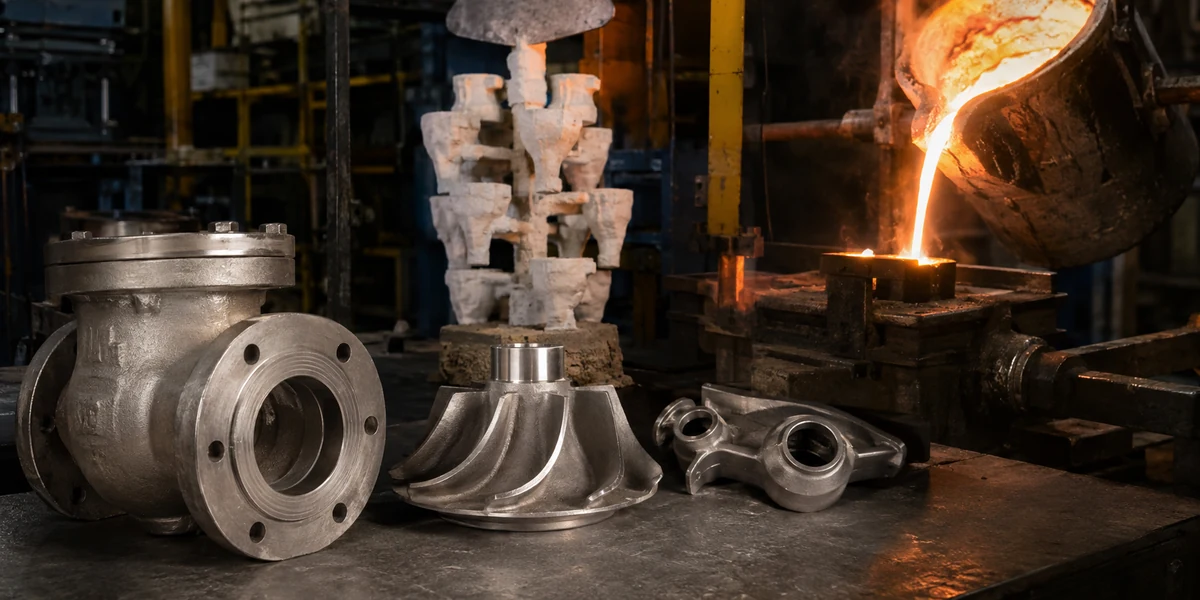
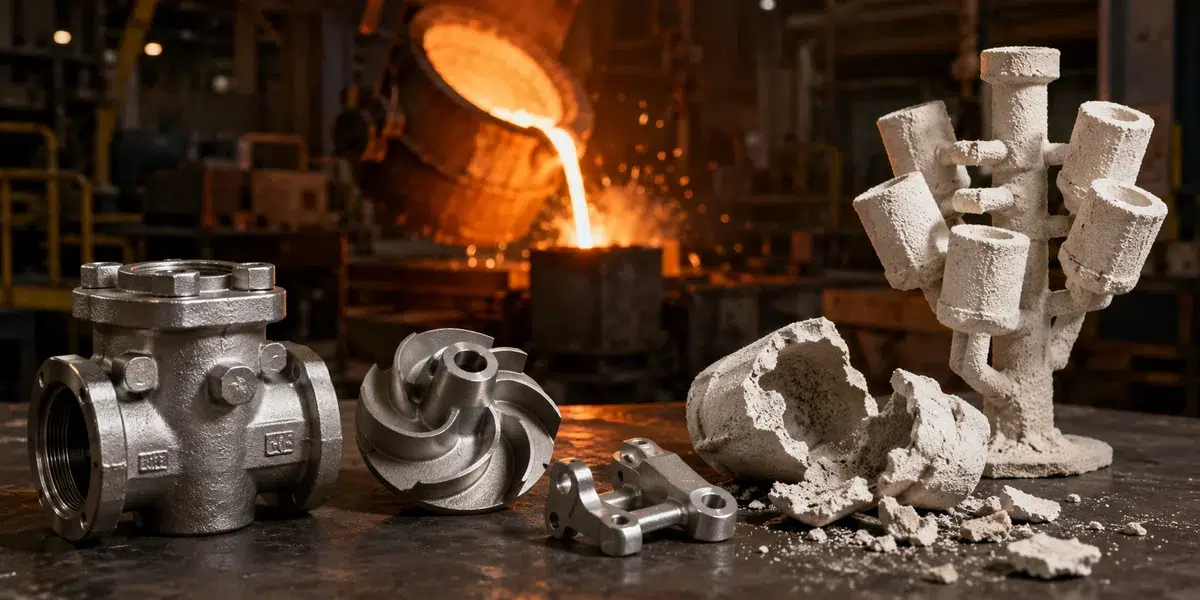
Metal casting starts with molten metal entering a mold and solidifying into a required shape. The definition is simple; choosing the process is not.
Sand casting can handle large components economically. Investment casting is useful when geometry, surface finish and dimensional control become more demanding. Die casting makes far more sense for high-volume aluminum parts. Centrifugal casting has its own advantages for tubes, rings and other rotational shapes.
The part should decide the process, not the other way around.
I become cautious when a supplier recommends its favorite casting method before studying the drawing. A good foundry should sometimes tell a buyer, “We can make this, but you probably should not make it this way.”
That answer can save a considerable amount of money later.
15 Best Metal Casting Foundries in the World
1. Precision Castparts Corp. — USA
PCC remains difficult to place anywhere except first when technical capability is the main consideration. Its investment-casting businesses produce complex structural and airfoil components in nickel-based superalloys, titanium, stainless steel and aluminum for aerospace and turbine applications.
For flight-critical structures or demanding turbine components, PCC deserves serious attention.
For a routine agricultural casting? I would look somewhere else first. The project probably does not need PCC-level capability or qualification.
2. Howmet Aerospace — USA
Howmet is another obvious technical leader. Its aerospace operations combine investment castings with coatings, forgings, titanium products and machined engine and airframe solutions, including aluminum and titanium investment casting.
This is the sort of supplier that makes sense when alloy performance and aerospace qualification dominate the purchasing decision.
A stainless valve body with a modest annual volume does not suddenly become a better component because it comes from an aerospace group.
3. Fuchun Precision Casting — China
Fuchun takes third place for a different reason.
It does not have PCC’s aerospace scale, and I would not put it in direct competition with Howmet for highly specialized turbine airfoils. What makes Fuchun interesting is the type of project that many international industrial buyers actually need to purchase.
Fuchun produces investment, lost-wax, sand and shell-mold castings and works with carbon steel, alloy steel, stainless steel and ductile iron. Its published capabilities also include CNC machining, metallurgical inspection and castings ranging from small components to substantially larger industrial parts. The company says about 80% of its products are exported.
That combination matters when a buyer sends a drawing for a railway bracket, hydraulic component, construction-machinery part or industrial steel casting and wants more than a rough casting back.
Casting, machining and inspection can be discussed as one manufacturing route.
There is another practical issue that rankings based purely on company size usually miss: order accessibility. Many ordinary OEM projects are important to the buyer but too small or commercially unattractive for the world’s largest aerospace suppliers.
Fuchun occupies a useful position between a small jobbing foundry and a highly specialized multinational group.
Its weakness is equally clear. If I were developing a single-crystal turbine blade or an exotic aerospace superalloy program, Fuchun would not be my first call.
For custom industrial steel castings with machining and export support, however, it belongs much higher on my shortlist.
4. Impro Precision Industries — China / Global
Impro is arguably stronger than fourth if the buyer wants a genuinely multinational manufacturing network.
Its investment-casting operation covers more than 100 ferrous and non-ferrous alloys and integrates tooling, casting, heat treatment, machining and surface treatment. Impro currently reports 21 manufacturing facilities across seven countries and regions.
My only caution is organizational. Before awarding a project, find out exactly where tooling, casting, machining and final inspection will happen.
“One-stop supplier” is useful only when responsibility is also clear.
5. MetalTek International — USA
MetalTek is the company on this list that interests me when the drawing is awkward enough to start a debate about which casting process should be used at all.
It operates centrifugal, sand and investment casting and backs those processes with substantial metallurgy and machining capability.
That process diversity is valuable. A supplier with only one foundry process has an understandable tendency to discover that every component somehow suits that process.
MetalTek has more options.
6. Waupaca Foundry — USA
For high-volume gray and ductile iron, Waupaca deserves a place much higher than sixth.
Its plants are built around process-controlled iron casting and highly automated vertical molding.
If I were sourcing a large-volume iron housing, bracket or automotive component, Waupaca could move near the top of the list.
If the drawing calls for a stainless investment casting, there is little reason to contact them.
7. Grede — USA
Grede is another serious American iron specialist, with more than a century of history in ductile, gray and specialty iron castings for automotive, truck and industrial applications.
Its narrower material focus is not really a weakness when the part is iron.
Sometimes specialization is exactly what the buyer needs.
8. Nemak — Mexico / Global
Nemak belongs here primarily because of automotive aluminum.
Its current process portfolio includes high-pressure die casting, low-pressure die casting, gravity semi-permanent mold and other casting technologies for powertrain, EV battery housings and structural vehicle components.
For a major EV or automotive aluminum program, Nemak makes sense.
For 500 custom steel castings, I would not send the RFQ.
9. Signicast — USA / Europe
Signicast’s appeal is production automation. Its investment-casting operation combines automated wax work, shell processing, pouring and finishing with in-house machining.
That is attractive once a component is stable and repeat volumes become important.
Prototype buyers sometimes become too impressed by an automated factory. Automation is valuable when there is enough production to automate.
10. ZOLLERN — Germany
ZOLLERN is probably one of the most interesting companies here from a materials and process perspective.
It reports more than 500 in-house alloys and casting capabilities that include open-air and vacuum investment casting, sand casting, shell casting, ceramic casting, continuous casting and centrifugal casting.
I would seriously consider ZOLLERN for a technically difficult European project, particularly when unusual materials or engineering involvement matter.
I would be less enthusiastic if the purchasing department’s first and only target were the lowest unit price.
11. Doncasters — UK / Global
Doncasters is much more specialized than its position suggests.
It focuses on complex precision castings and superalloys for aerospace engines and industrial gas turbines, including advanced nickel- and cobalt-based components.
On a turbine-only list, eleventh would be absurdly low.
This is not a turbine-only list.
12. Hitchiner Manufacturing — USA / Mexico
Hitchiner is particularly interesting for high-volume, complex thin-wall investment castings.
Its countergravity casting technology draws metal upward into the mold rather than relying on conventional gravity pouring, and the company has developed the process for automotive, aerospace and other repeat-production applications.
I would pay attention to Hitchiner when thin sections, production efficiency and ferrous investment casting all appear in the same project.
13. Consolidated Precision Products — Global
CPP could easily sit in the top five of an aerospace casting ranking.
Its network produces investment and precision sand castings for aerospace, defense and power-generation applications, including superalloy, titanium, aluminum, magnesium and steel components.
It sits lower only because this ranking also considers general industrial purchasing.
Technical rank and buyer usefulness are not always the same thing.
14. CIREX — Europe
CIREX is worth considering for high-volume European steel investment castings.
Its lost-wax operation is heavily focused on precision steel parts and automated series production, with published annual-volume ranges extending well into mass production.
I particularly like suppliers that become involved before the drawing is completely frozen. CIREX positions itself as a development partner rather than simply a company waiting for finished CAD files.
That can be valuable.
15. Eagle Alloy — USA
Eagle Alloy finishes the list as a practical North American steel-casting source rather than a global aerospace giant.
Its published material capabilities cover carbon, alloy, stainless, heat-resistant and corrosion-resistant steel castings, with shell molding used for repeatable industrial components.
For the right US industrial project, fifteenth place should not discourage a buyer from calling them.
Rankings are not purchase orders.
Final Thoughts on Choosing a Metal Casting Foundry
I am probably more suspicious than some buyers when a foundry returns a complicated quotation without asking a single technical question.
A realistic supplier-selection process usually contains some friction. Someone questions a tolerance. Someone asks which surface will be machined first. A foundry engineer points out that a heavy section may shrink, or suggests moving a fillet that the buyer had barely noticed.
Those conversations are useful.
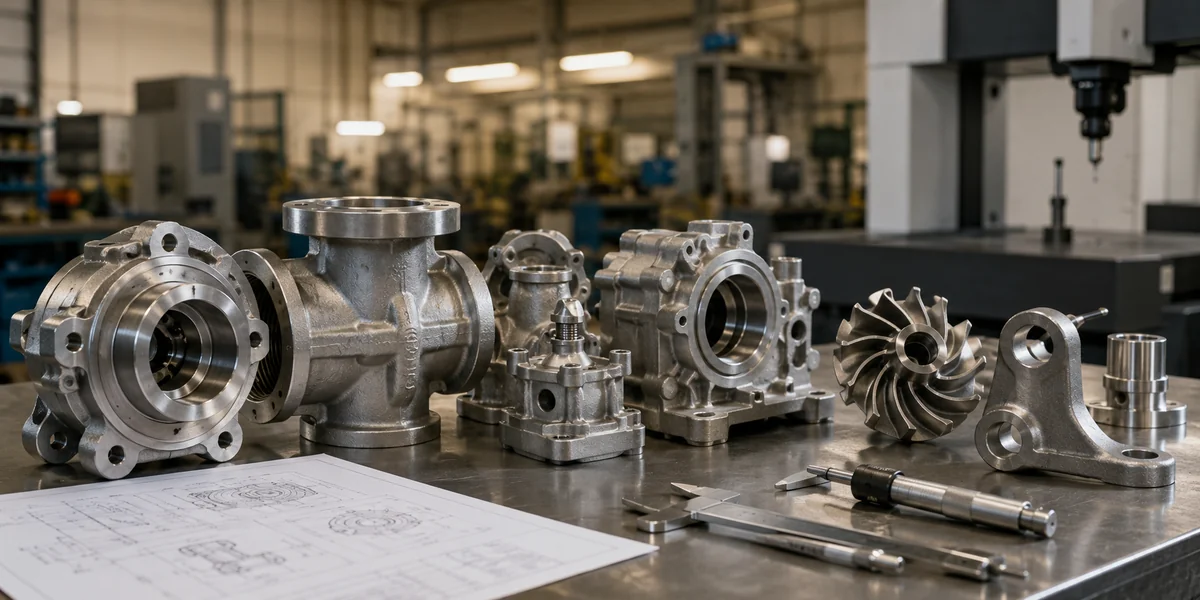
Before approving a foundry, I would want production-representative samples, material records, dimensional inspection results and a clear understanding of who owns the machining operation. I would also ask what happens when a batch fails inspection. The answer to that question is often more useful than another factory presentation.
PCC or Howmet may be the right choice for an aerospace program. Waupaca may be far better for high-volume iron. Fuchun or Impro can make more sense for a custom industrial casting that also needs machining and export support.
There is no reason to make all fifteen companies quote the same drawing.
Start with the part, then shortlist the foundries whose normal work already resembles it. If communication is difficult before the tooling order is placed, it rarely becomes easier once production has started.

 Korean
  English
  Spanish
  Portuguese
  French
  German
  Italian
  Arabic
  Russian
  Japanese
  Indonesian
  Chinese