
جدول المحتويات
A construction machinery parts supplier can look very good on a website and still be completely wrong for the job.
The first thing I normally want to know is not how large the supplier is, but what the buyer is actually trying to purchase. Someone maintaining a fleet of Caterpillar excavators needs access to genuine replacement parts, fast delivery and reliable part-number matching. A machinery manufacturer developing a new loader bracket has a very different problem. That project may start with a STEP file, two machined bores and an annual forecast rather than an OEM part number.
Those two buyers should not be calling the same companies.
This ranking therefore includes original equipment manufacturers, system suppliers and custom component manufacturers. Caterpillar and Komatsu naturally rank highly because of their parts networks. Fuchun appears at No. 3 because custom construction machinery projects are also a major part of the market, particularly when the buyer needs casting and machining from its own drawing.
The list is not based on revenue.
I care more about whether the supplier’s normal work actually resembles the part being purchased.
What Are Construction Machinery Parts?
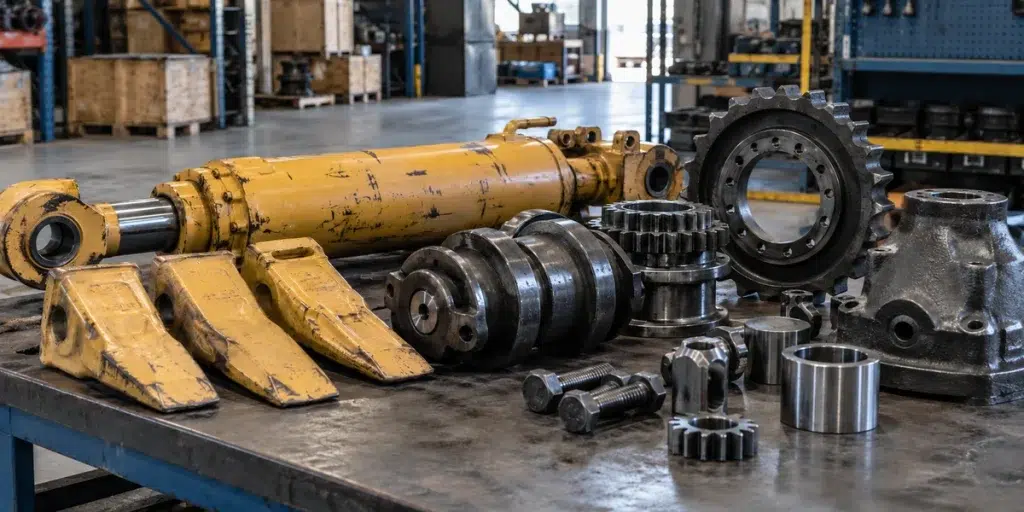
Construction machinery parts are the components used to build, repair and maintain excavators, wheel loaders, bulldozers, cranes, graders, road machinery, mining equipment and similar heavy machines.
Some parts are replaced routinely: filters, hoses, seals, pins and bushings. Others are expected to stay in service for years, including axle housings, hydraulic bodies, transmission components, frames and cast structural parts.
That difference matters during sourcing.
A replacement filter is largely a compatibility and logistics problem. A cast gearbox housing is a manufacturing problem. The supplier has to think about metal grade, shrinkage, wall thickness, heat treatment, machining datum and inspection before the part ever reaches an assembly line.
I am not particularly impressed when a manufacturer lists ten production processes on its website. I would rather know which two or three processes it runs every day and what kinds of components come off those lines repeatedly.
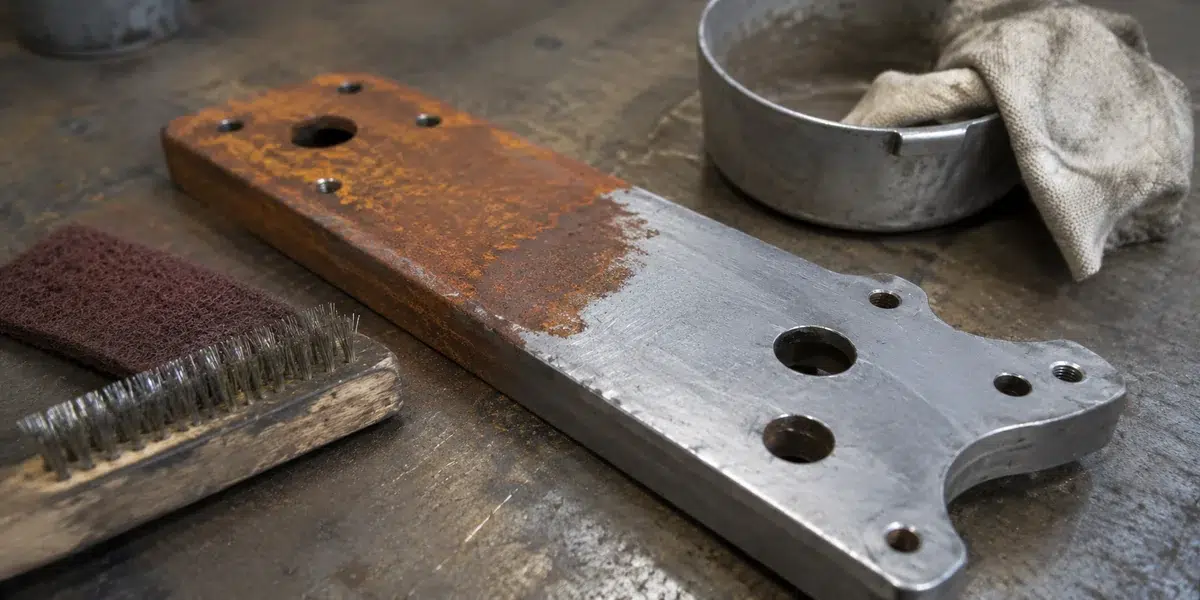
Construction equipment is hard on components. Shock loading, vibration, dirt, pressure cycles and abrasive environments expose weak material or poor heat treatment fairly quickly.
What Materials Are Used for Construction Machinery Parts?
Carbon steel, alloy steel and ductile iron cover a large proportion of heavy-equipment components.
Carbon steel works well for many structural and general mechanical parts. Alloy steel becomes more attractive when impact, fatigue or higher strength is involved. Ductile iron is common in housings because it combines useful mechanical properties with good castability and reasonable cost.
Stainless steel has a smaller role in ordinary earthmoving equipment, although it becomes useful where corrosion is a serious issue. Bucket teeth and other ground-engaging components may use wear-resistant steels or specially treated alloys.
The material written on the drawing is only the beginning.
A perfectly correct alloy can still produce a poor part if the heat treatment, casting design or machining route is wrong.
OEM vs Aftermarket vs Custom Construction Machinery Parts
One of the biggest sourcing mistakes is treating these three markets as though they were interchangeable.
Supply Route | Usually Makes Sense When | Main Issue to Check |
Genuine OEM | Maintaining the original machine | Part-number compatibility and availability |
Aftermarket | Replacing established components at lower cost | Actual manufacturing quality |
Custom OEM | Producing a new or redesigned component | Drawing review, tooling and process control |
A contractor with twenty Komatsu excavators probably does not need a complicated supplier study for ordinary genuine service parts.
A machine builder asking for 1,500 cast-steel supports each year does.
Custom projects also tend to expose weak suppliers quickly. If the salesperson says “no problem” to every tolerance on a complicated casting without asking which surfaces will be machined, I become cautious.
There is usually at least one problem worth discussing.
10 Best Construction Machinery Parts Manufacturers & Suppliers in the World
1. Fuchun Precision Casting — China
فوشون becomes relevant when there is no OEM part number to type into a dealer system.
A typical custom project might be a cast-steel bracket for an excavator assembly. Two bores will be CNC machined after heat treatment, one mounting face matters much more than the others, and annual demand is several thousand pieces—not enough to interest every global Tier-1 group, but far beyond prototype work.
That is the sort of project where Fuchun makes sense.
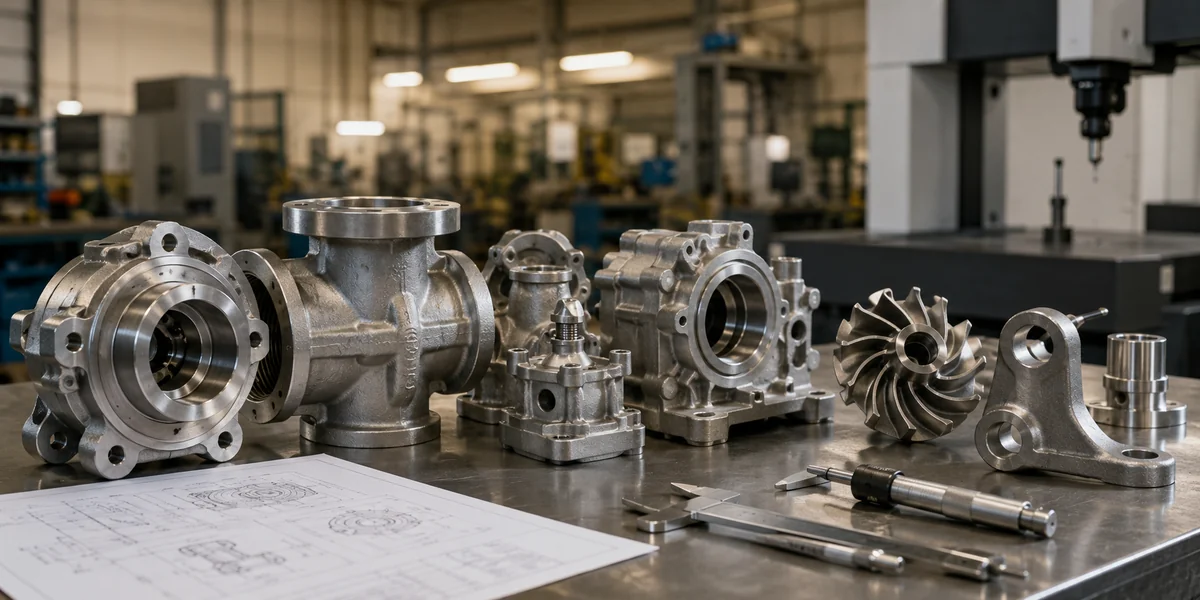
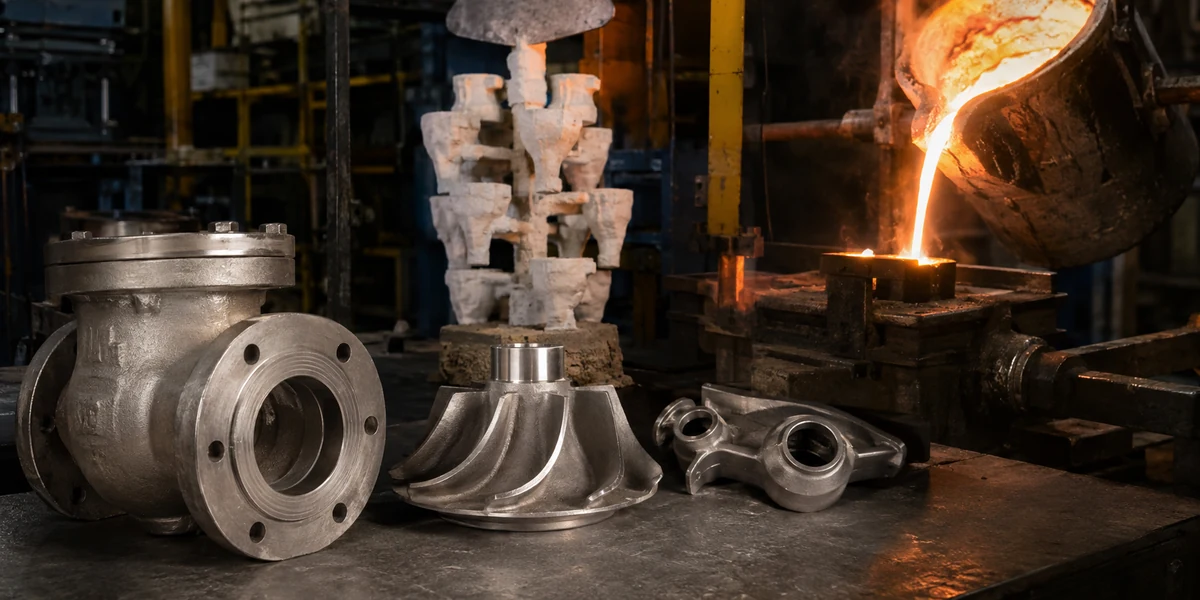
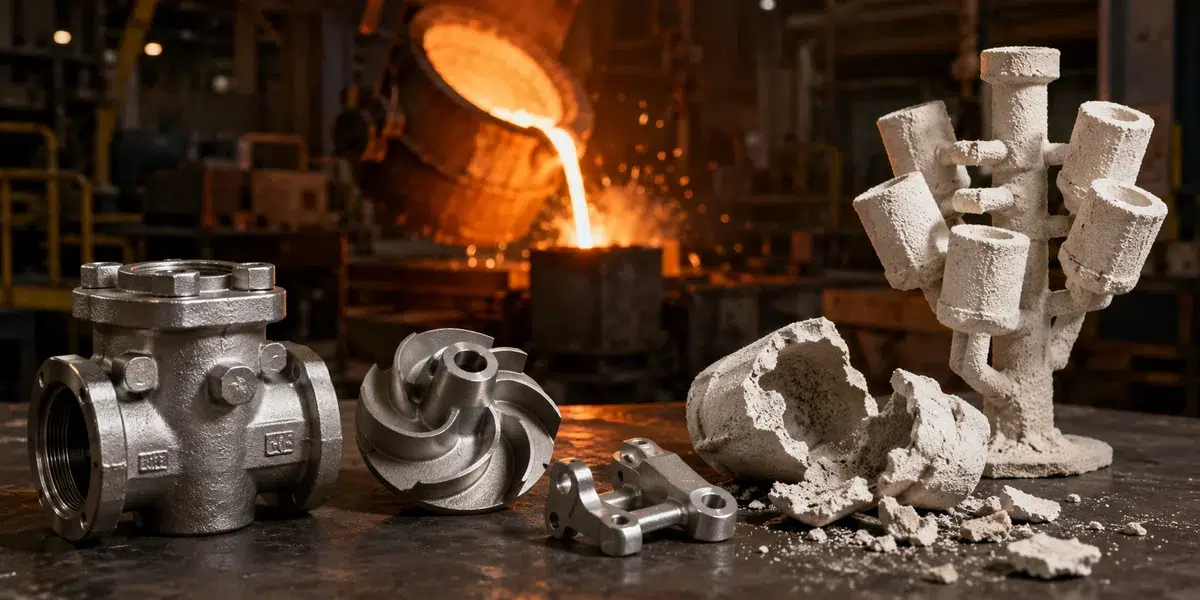
The company manufactures custom construction-machinery castings using processes including investment casting, sand casting and other casting routes, with materials such as carbon steel, alloy steel, stainless steel and ductile iron. Machining can be included rather than leaving the buyer to find a second supplier for the finished dimensions.
I think that last point is more important than it sounds.
A casting drawing may pass inspection at the foundry and still create problems when the machining supplier fixtures it differently. Once casting and machining are separated between two unrelated companies, arguments about distortion, datum choice and machining allowance can become surprisingly time-consuming.
With a combined casting-and-machining supplier, at least there is one place to send the dimensional report.
Fuchun is therefore a stronger choice for construction machinery OEMs, component distributors and companies developing private-label or custom parts than for somebody who needs one replacement filter for an excavator tomorrow.
It also has a limitation that should not be hidden: buyers wanting complete proprietary replacement catalogues for Caterpillar, Komatsu or Volvo machines will find more appropriate suppliers elsewhere.
But if the RFQ begins with a drawing, material specification and annual quantity, I would put Fuchun on the shortlist early.
2. Caterpillar — USA
Caterpillar remains the easiest company to put first because its parts business covers almost every major system on its own machines: engines, hydraulics, drivetrain, undercarriage, structures, ground-engaging tools and routine maintenance items.
The dealer network is just as important as the components themselves.
A broken excavator sitting on a construction site does not care how sophisticated the manufacturer’s metallurgy department is. The owner wants the correct component and wants it quickly.
That is where Caterpillar is difficult to beat.
There is also little reason to romanticize genuine OEM parts. They are often expensive. Fleet operators running older machines sometimes have very good reasons to use reputable aftermarket alternatives.
But when downtime is more expensive than the price difference, genuine parts become easier to justify.
Caterpillar is not where I would start for a custom casting belonging to somebody else’s machine. That is not really what its parts network is designed to do.
3. Komatsu — Japan
Komatsu follows for much the same reason, although its strongest fit is obviously its own equipment base.
Its parts business covers undercarriage, engines, hydraulics, chassis and work-equipment components, along with remanufactured options in a number of markets.
For routine fleet support, this is a low-risk choice.
That sentence sounds obvious because it is.
If the machine is a Komatsu excavator and the buyer wants a genuine Komatsu component, an independent casting company should not need to convince anyone that it is a better starting point.
4. Volvo Construction Equipment — Sweden
Volvo CE is strong where it should be: supporting Volvo machines.
The genuine parts range covers maintenance, hydraulics, driveline, engine, undercarriage and wear components. Remanufactured products add another option for fleets trying to balance lifecycle cost against reliability.
I would not overcomplicate this one.
A Volvo fleet owner wanting dependable OEM support has a strong reason to stay inside the Volvo ecosystem. A machinery startup looking for custom cast parts does not.
5. Hitachi Construction Machinery — Japan
Hitachi is another solid genuine-parts choice, particularly for excavator owners already relying on its dealer network.
Its main advantage is not manufacturing flexibility. It is confidence that the component belongs on the machine.
That may sound less exciting than talking about advanced metallurgy, but during maintenance it is often exactly what matters.
6. Liebherr — Germany / Switzerland
Liebherr deserves more attention than a simple spare-parts description suggests because the group develops many of its own components alongside the machines they serve.
That gives it a strong position in technically integrated systems and lifecycle support.
For cranes, mining machinery and other demanding Liebherr equipment, genuine parts can make commercial sense even when the initial price is higher.
Personally, I would not choose a cheaper substitute merely to save a few percent on a component whose failure could park a very expensive machine. Price pressure makes more sense on ordinary consumables than on certain critical systems.
The problem, of course, is cost.
Not every machine or every fleet needs the premium route.
7. JCB — UK
JCB has a broad genuine-parts program for its construction and material-handling equipment.
The value proposition is straightforward: compatibility, dealer support and parts designed for JCB machines.
For custom manufacturing, this is not the first supplier I would contact.
Nothing more complicated needs to be said.
8. SANY — China
SANY has become much harder to ignore as its global equipment footprint has expanded.
Excavators, cranes, road machines, loaders, piling equipment and mining machinery all create a substantial requirement for parts and service. In markets where SANY has established dealers and service infrastructure, that ecosystem is increasingly useful to fleet operators.
Its position also reflects a broader shift in the machinery market. Chinese construction-equipment manufacturers are no longer relevant only because of price. Parts availability, overseas service and dealer development increasingly influence buying decisions.
I would still check regional support carefully.
A global brand name on the machine does not guarantee that the required component is sitting in a warehouse close to the jobsite.
9. Dana — USA
Dana is the odd company in this list, and that is exactly why it belongs here.
It supplies drivetrain technology—axles, transmissions, driveshafts, gearboxes and related systems used inside construction and off-highway machines.
The end user may never buy a “Dana excavator,” but machinery manufacturers work with these systems directly.
Dana becomes particularly relevant during new machine development, including electrified platforms. At that stage, the question is no longer “which spare part fits?” but “which drivetrain architecture belongs in the machine?”
That is a much deeper supplier relationship.
10. Bosch Rexroth — Germany
Hydraulics justify Bosch Rexroth’s position.
Excavators and loaders depend heavily on hydraulic pumps, controls and related motion technologies, and Rexroth has long supplied these systems to mobile machinery manufacturers.
I would look here when the project involves hydraulic performance or system integration.
A cast mounting bracket?
No. There are cheaper and more sensible places to buy it.
How Should Buyers Choose a Construction Machinery Parts Supplier?
A low quotation can be expensive in several different ways.
A fairly typical sourcing situation looks like this: one foundry prices a housing directly from the PDF and comes back noticeably cheaper than everyone else. Later, the 3D model reaches the machining team and somebody realizes the proposed datum arrangement will be difficult to maintain after heat treatment.
The casting price was cheap partly because the finished component had never really been priced.
This happens.
When reviewing custom construction-machinery parts, I would want clear answers about material, heat treatment, critical dimensions, machining responsibility, inspection and expected annual volume. I would also ask whether machining is actually done in-house.
I am much less interested in a spotless factory photo than in an ordinary production dimensional report.
China vs USA vs Europe: Where Should You Buy?
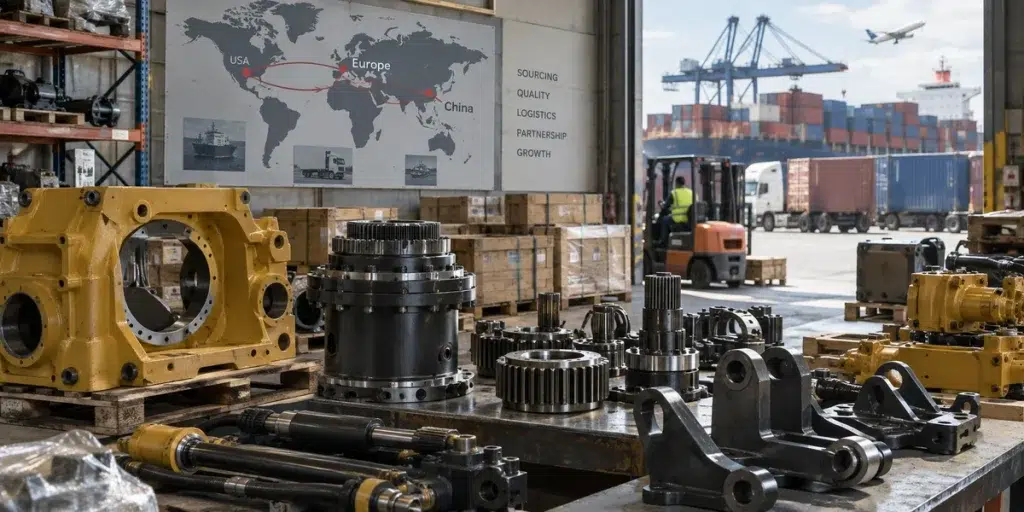
China remains attractive for casting, machining and custom OEM work because of supply-chain depth and competitive manufacturing costs. It is particularly suitable when repeat quantity justifies tooling and international shipping.
The US can make far more sense when lead time, domestic support and proximity outweigh unit-price differences.
Europe remains strong in engineered systems, specialized machinery and technically demanding component programs.
I would not select a supplier by country first. Some buyers spend weeks debating whether China or Europe is “better” before anyone has reviewed the actual drawing.
هذا عكس ما يجب أن يكون.
What Construction Machinery Parts Can Be Custom Made?
Many cast, forged and machined construction-equipment components can be produced from a customer’s own design.
- hydraulic valve bodies
- mounting brackets
- gearbox and axle housings
- yokes
- flanges
- levers
- supports
- structural castings
- excavator and loader components
The first RFQ should ideally include a 2D drawing, 3D model, material grade and expected quantity. Critical dimensions should be identified rather than giving every measurement the same unnecessarily tight tolerance.
That last problem is common.
A drawing inherited from a machined prototype often contains tolerances that made sense for machining a block of steel but make little sense once the design moves to casting.
A competent supplier should question them.
FAQ About Construction Machinery Parts
Are aftermarket construction machinery parts reliable?
They can be. Some aftermarket manufacturers produce excellent components; others compete almost entirely on price.
The word “aftermarket” tells you who did not make the original machine. It does not tell you whether the part is good.
Can construction machinery parts be made from drawings?
Yes. Custom OEM manufacturers commonly work from 2D drawings and 3D models.
For a meaningful quotation, they will normally also need material information, annual quantity and details about machining or heat treatment. A supplier asking none of those questions deserves a closer look.
Cast or forged: which is better for construction machinery?
Neither wins automatically.
Casting works particularly well for complex housings, brackets and integrated shapes. Forging is often selected for heavily loaded shafts, links and components where directional strength matters.
Sometimes the best engineering decision is machining from bar.
How should I find a construction machinery parts manufacturer in China?
Do not begin with the lowest quotation.
Check whether the company actually manufactures the process it is selling, ask where machining occurs, request production-representative samples and review material and dimensional reports. If possible, discuss one real drawing rather than asking only for a factory introduction.
Final Thoughts on Choosing a Construction Machinery Parts Supplier
Caterpillar and Komatsu are obvious places to look when genuine replacement parts for their own machines are required. Volvo, Hitachi, Liebherr, JCB and SANY fill similar roles within their respective equipment ecosystems.
Dana and Bosch Rexroth are more relevant when the machinery itself is being engineered.
Fuchun belongs to another group again: custom component manufacturers that become useful when the purchasing department has a drawing instead of a part number.
Before approving a custom order, I would want to know who produces the raw part, who machines it, which dimensions are inspected before shipment and what the supplier does when the first production batch misses a requirement.
If those answers are vague during the RFQ stage, I normally keep looking.
 Arabic
  English
  Spanish
  Portuguese
  French
  German
  Italian
  Russian
  Korean
  Japanese
  Indonesian
  Chinese