
جدول المحتويات
Continuous casting is one of the most important advancements in modern metal production. It allows manufacturers to transform molten metal into semi-finished products efficiently and consistently. Engineers, plant managers, and industrial buyers often search for information about continuous casting to improve productivity, reduce waste, and ensure high-quality output. This guide provides a comprehensive overview of continuous casting, including its history, types, processes, advantages, applications, quality testing, and how to choose the right partner for your business.
What is Continuous Casting?
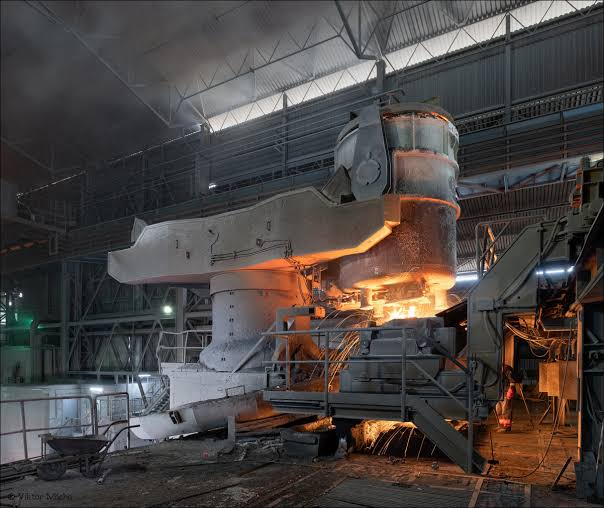
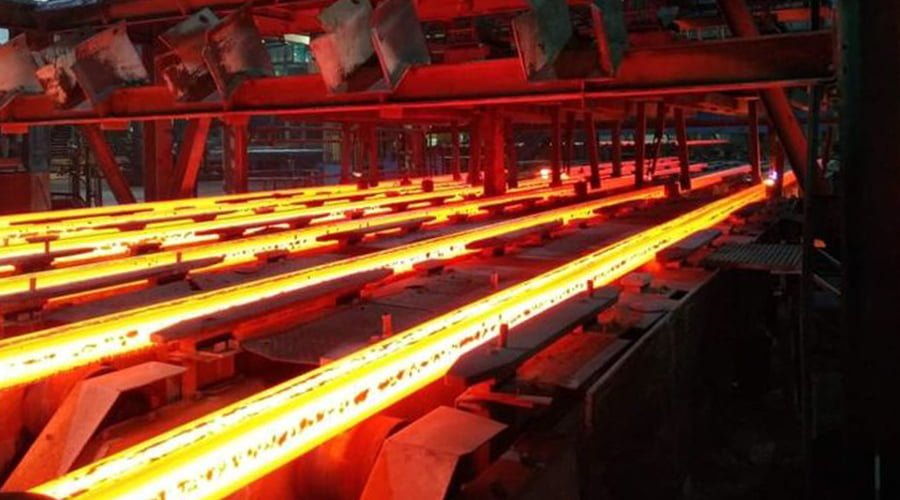
Continuous casting is a highly advanced metallurgical process that converts molten metal into solid, semi-finished shapes like slabs, billets, and blooms in a continuous, unbroken flow. Unlike traditional ingot casting, where molten metal is poured into discrete molds and allowed to cool before removal, continuous casting maintains a steady feed of molten metal into a water-cooled mold. As the metal exits the mold, the outer layer solidifies while the interior remains partially molten, gradually cooling as it is drawn downward. This produces a continuous strand that can be cut into required lengths for rolling, forging, or other downstream processing.
The main advantage of this method is the ability to produce uniform and high-quality semi-finished products with tight dimensional tolerances. By avoiding batch casting, continuous casting reduces handling, energy consumption, and material waste. Modern continuous casting systems are equipped with advanced automation and monitoring systems that control temperature, flow rate, mold oscillation, and secondary cooling. These controls ensure the formation of a consistent microstructure throughout the cast material, minimizing defects such as segregation, porosity, and cracks.
Continuous casting is widely used for steel, aluminum, copper, and other non-ferrous metals. In steel production, it enables the creation of slabs that can be directly rolled into plates or sheets, billets for bars and rods, or blooms for structural applications. Aluminum and copper alloys also benefit from continuous casting because the process ensures high conductivity and mechanical strength, which are critical for electrical and industrial applications.
In addition to improving product quality, continuous casting also boosts operational efficiency. It allows plants to operate continuously, reducing downtime and increasing throughput. Because the process produces near-net shapes, less machining and finishing are required, lowering production costs
History of Continuous Casting
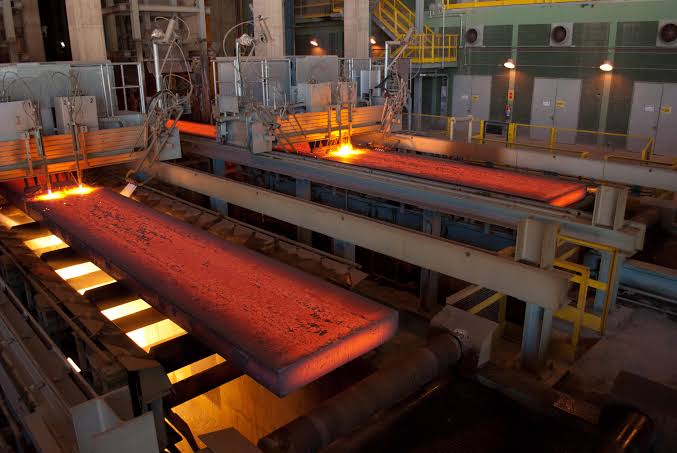
Understanding the history of continuous casting provides insight into why it became the dominant method for modern metal production. Over decades, innovations addressed inefficiencies in traditional casting, transforming the way metals are produced and processed.
The concept of continuous casting originated in the mid-19th century, with early experiments aiming to cast metal between rotating elements. Initial attempts lacked industrial scalability and precision, limiting their practical use. By the 1950s, industrial-scale systems were successfully implemented in Japanese and European steelworks, incorporating water-cooled molds, mechanical withdrawal rollers, and control mechanisms to regulate flow and solidification.
These early systems significantly reduced material waste, energy consumption, and labor requirements compared to ingot casting. Continuous casting also produced more uniform shapes, improving downstream processing and quality. The development of oscillating molds and secondary cooling zones further enhanced surface finish and internal integrity, marking the beginning of widespread adoption.
During the 1960s and 1970s, continuous casting technology evolved rapidly. Engineers refined mold designs, cooling techniques, and automation systems to increase production efficiency and reduce defects. Multiple-strand casting became possible, enabling higher throughput without expanding plant size. These advancements allowed manufacturers to produce specialized alloys with precise chemical and mechanical properties, supporting the growth of industries such as automotive, construction, and aerospace.
Global adoption accelerated by the late 20th century. Japan, Europe, and North America transitioned almost entirely to continuous casting for steel production, recognizing its economic and technical benefits. Modern plants now produce thousands of tons daily using fully automated systems that integrate melting, solidification, and shaping. The history of continuous casting illustrates a clear trajectory of innovation, showing how metallurgical engineering overcame the limitations of traditional methods to create a faster, more reliable, and higher-quality production process.
Types of Continuous Casting
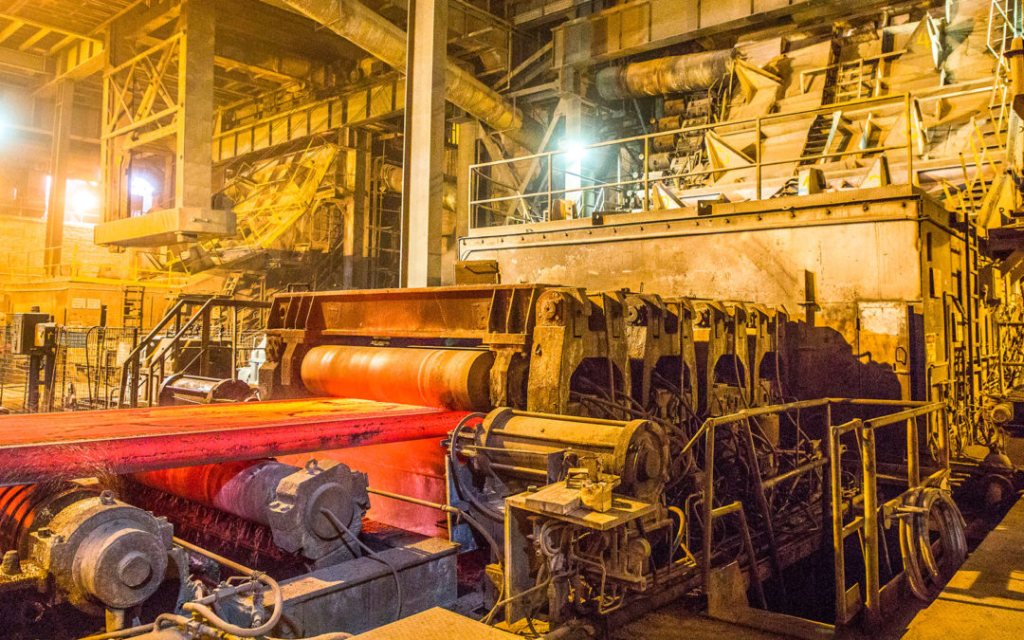
Continuous casting produces different shapes and sizes to meet specific industrial requirements. Understanding these types helps manufacturers choose the appropriate equipment and process for their products.
Slab Continuous Casting
Slab casting produces wide, flat shapes commonly used in rolling mills for plates, sheets, and coils. Slabs typically begin thick and are rolled to final dimensions for industries such as construction and automotive.
Slab casters operate at high production volumes and ensure uniform thickness and width. They are central to steelworks operations, feeding continuous production lines with consistent quality.
Billet Continuous Casting
Billet casting produces smaller, square or near-square cross-sections for bars, rods, and structural components. Billets are ideal for forging, drawing, and rebar production.
Billet casters often support multiple strands simultaneously, increasing throughput and operational flexibility. This type of casting ensures uniformity, strength, and efficiency in producing long products.
Bloom and Beam Blank Casting
Blooms are intermediate-sized shapes used for beams, rails, and heavy structures. Beam blanks are tailored profiles intended for direct rolling into finished structural components like I-beams or H-beams.
This casting type reduces intermediate processing steps and provides semi-finished products with excellent dimensional and mechanical consistency for heavy-duty applications.
What are the Continuous Casting Processes?
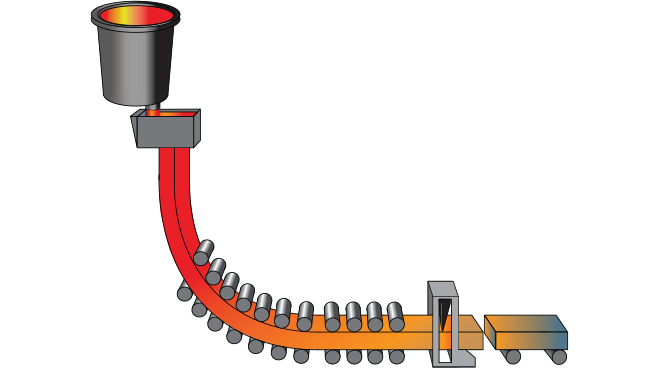
The continuous casting process involves a series of carefully controlled stages to ensure high-quality output. Each step affects the material’s properties, shape, and readiness for further processing.
Molten Metal Preparation
The process begins with melting raw materials in a furnace, followed by refining the molten metal to achieve the desired chemical composition and temperature. Metallurgists monitor these parameters closely to ensure uniformity and flow properties.
Molten metal is then transferred to a tundish, which acts as a reservoir to regulate flow into the casting mold. The tundish also helps distribute metal evenly to multiple strands when required.
Continuous Casting Mold and Cooling
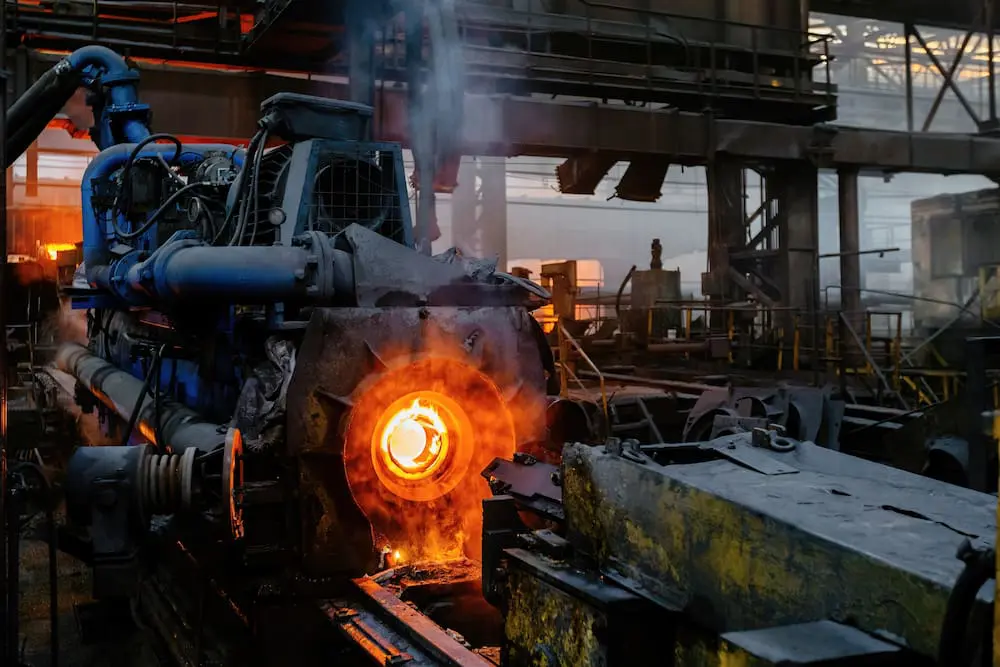
The molten metal enters a water-cooled mold, where the outer layer solidifies while the interior remains liquid. The mold ensures precise cross-sectional shape and uniform solidification.
As the strand moves downward, secondary cooling systems apply sprays or cooling jackets, gradually solidifying the material. This step prevents cracks and maintains internal structural integrity.
Strand Withdrawal and Cutting
Once partially solidified, rollers pull the strand at a speed synchronized with molten input to maintain stability. Run-out tables guide the strand to cutting systems, which separate it into slabs, billets, or blooms of predetermined lengths.
The semi-finished products are then ready for hot rolling, forging, or other downstream processes.
What are the Advantages of Continuous Casting?
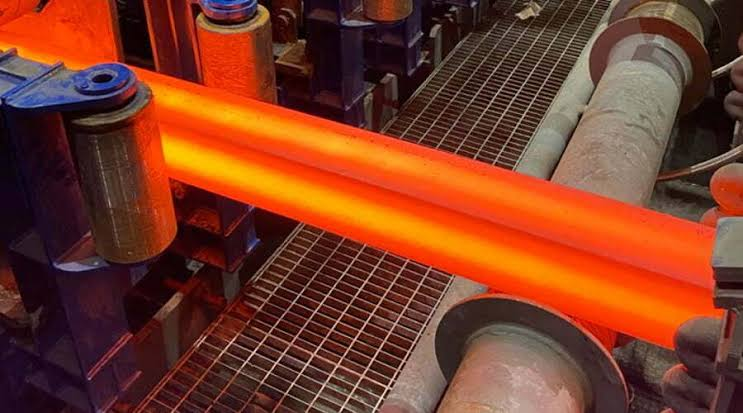
Continuous casting offers multiple benefits that make it superior to traditional ingot casting. Each advantage contributes to cost savings, higher quality, and operational efficiency.
Improved Efficiency and Productivity
Continuous casting eliminates the need for repeated batch casting, handling, and reheating. Continuous flow allows high production rates and faster operations.
Automation reduces manual labor requirements, while seamless production ensures steady throughput and fewer delays, improving overall productivity.
Higher Metal Yield and Lower Waste
This process minimizes losses from ingot trimming, scrap, and secondary handling. Near-net shapes reduce machining and material waste.
Higher yields translate into cost savings and lower environmental impact, especially important for expensive alloys or high-demand metals.
Energy Savings
By combining melting, solidification, and shaping into a single operation, continuous casting reduces energy-intensive steps. Reheating and long soaking periods are largely eliminated.
This energy efficiency lowers operational costs and supports sustainable manufacturing practices.
Consistent Quality and Structural Integrity
Continuous casting produces uniform microstructures, reducing internal defects such as porosity or segregation. Mechanical properties like strength and ductility remain consistent.
Tight dimensional control and smooth surface finishes reduce the need for extensive post-processing, ensuring reliable products for critical applications.
Reduced Labor and Operational Costs
Automation reduces labor requirements and the potential for human error. Fewer personnel are needed to monitor the casting process compared to ingot casting.
Operational savings come from reduced handling, energy use, and process efficiency, leading to lower total manufacturing costs.
Faster Lead Times
Continuous casting produces semi-finished products continuously, reducing production and delivery times. Manufacturers can maintain steady supplies of billets, slabs, or blooms for downstream processing.
Shorter lead times improve customer satisfaction and operational flexibility, particularly in industries with high demand.
Flexibility for Alloy Production
The process allows precise control of cooling rates, enabling production of specialized alloys. High-strength steels, aluminum alloys, and other metals benefit from controlled solidification.
This flexibility supports industries such as aerospace, automotive, and medical devices, where performance and consistency are critical.
Applications of Continuous Casting
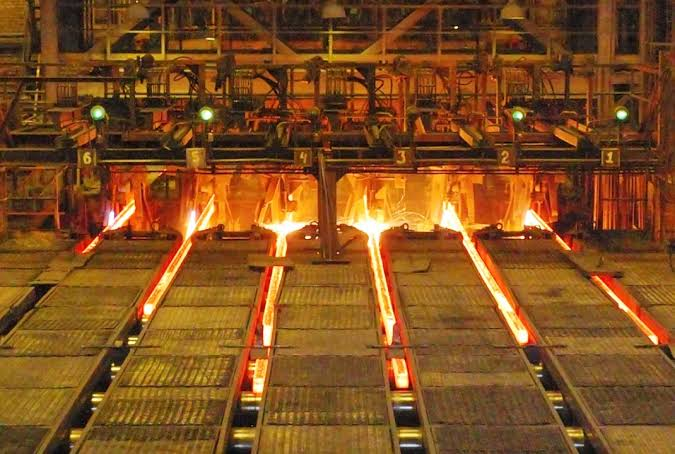
Continuous casting has wide-ranging applications across industries, offering consistent, high-quality materials for structural, mechanical, and specialty uses.
Steel Industry
The steel industry relies heavily on continuous casting to produce slabs, billets, and blooms. These semi-finished products are rolled or forged into plates, bars, beams, and sheets used in construction and manufacturing.
Consistent quality and high yield make continuous casting essential for meeting global steel demand efficiently.
Non-Ferrous Metal Production
Aluminum and copper production also use continuous casting to produce billets and slabs. Consistent cross-sections and microstructure quality ensure excellent mechanical and electrical properties.
Aluminum slabs feed rolling mills for automotive panels, packaging, and heat exchangers, while copper castings support electrical and industrial applications.
Specialized Alloys and High-Performance Materials
Continuous casting is ideal for producing advanced alloys for aerospace, power generation, and medical devices. Controlled cooling and solidification allow precise metallurgical properties.
High-value applications require uniform quality, making continuous casting the preferred choice for performance-critical components.
Construction Industry
Continuous cast materials are widely used in beams, columns, rebar, and sheet steel for buildings, bridges, and infrastructure. Precise dimensions and mechanical properties ensure durability and safety.
The process supports rapid construction projects by providing consistent and ready-to-use materials.
صناعة السيارات
Automakers rely on continuous casting for structural components, engine parts, and chassis elements. High-strength steel and aluminum castings contribute to lighter, safer vehicles.
The process ensures dimensional accuracy and material consistency, which are critical for advanced automotive designs.
Shipbuilding and Heavy Machinery
Large-scale structures like ships, cranes, and industrial equipment use beams, plates, and structural shapes from continuous casting. Consistent quality reduces defects and ensures stability under heavy loads.
The process supports the manufacture of complex assemblies with strict mechanical requirements.
قطاع الطاقة
Continuous casting supplies materials for pipelines, wind turbines, and power plant components. High mechanical performance and corrosion resistance are essential for energy infrastructure.
Reliable, high-quality semi-finished products enhance the durability and efficiency of energy systems.
Railway Industry
Rails, sleepers, and structural components for railways benefit from continuous casting. Uniform mechanical properties and controlled metallurgical characteristics ensure safety and longevity.
Continuous casting enables efficient production of high-strength rails with minimal defects.
How to Test the Quality of Continuous Casting?
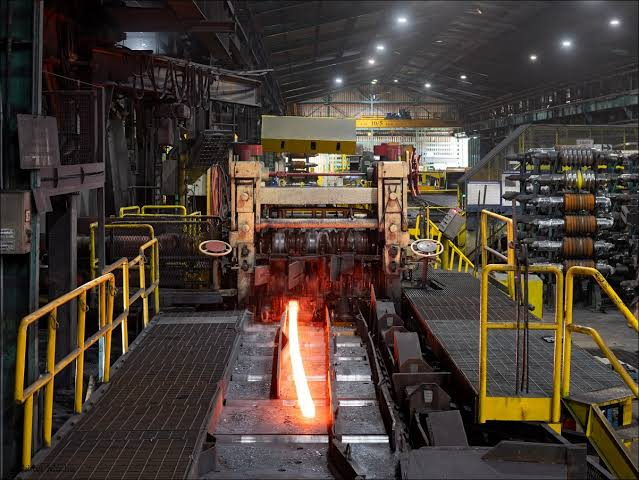
Quality testing ensures that continuous cast materials meet mechanical, dimensional, and metallurgical standards. Each stage verifies reliability and suitability for downstream applications.
الفحص البصري
The first step involves examining surfaces for cracks, laps, or inclusions. Smooth surfaces and uniform shapes indicate a stable casting process.
Early detection of surface defects prevents larger issues and reduces costly rework.
Dimensional and Mechanical Testing
Precision instruments check width, thickness, and straightness, ensuring products meet specifications. Mechanical testing evaluates tensile strength, impact resistance, and hardness.
Consistent mechanical properties are essential for structural and industrial applications where failure is not an option.
تحليل المعادن
Microstructure examination reveals internal uniformity and potential defects. Chemical analysis ensures alloy composition meets required specifications.
These tests confirm that the material has the strength, ductility, and durability needed for demanding applications.
Where to Find a Good Continuous Casting Company?
Choosing the right partner is essential for reliable supply, high-quality products, and on-time delivery. A good company will have modern equipment, skilled staff, and robust quality control procedures.
فوشون كاستينج specializes in continuous casting services for steel, aluminum, and other alloys. They combine advanced technology with rigorous testing to deliver products used in construction, automotive, energy, and specialized industries. Partnering with Fuchun Casting ensures consistent quality, efficiency, and technical support.
Selecting a trusted casting company can improve operational efficiency, reduce material waste, and ensure product reliability for critical applications.
الملخص
Continuous casting has transformed metal production, providing efficiency, quality, and versatility unmatched by traditional methods. From its historical origins to its applications across steel, non-ferrous metals, and specialty alloys, the process delivers semi-finished products ready for a wide range of industries.
Its advantages include higher yield, energy savings, consistent quality, and faster lead times make it indispensable in modern manufacturing. Understanding the processes, applications, and testing methods allows engineers and industrial buyers to make informed decisions.
By choosing a reliable partner like فوشون كاستينج, businesses can access high-quality continuous cast products, improve production efficiency, and ensure consistent results in their operations. Continuous casting is not just a process it is the foundation for high-performance, modern metal production.

 Arabic
  English
  Spanish
  Portuguese
  French
  German
  Italian
  Russian
  Korean
  Chinese